Saturday, 20 March 2010

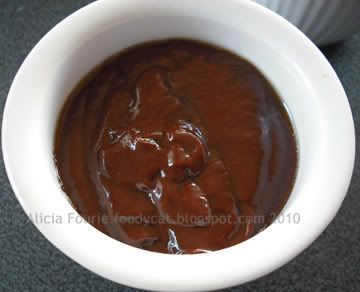
Like Water For Chocolate - Mexican Chorizo

When I first read Laura Esquivel's magic realist novel Like Water For Chocolate, many years ago now, I absolutely loved it. I was delighted to have the opportunity to re-read it for this round of the Cook the Books Club.

Sadly, I didn't love it this time around. Pedro is such a waste of space, that it makes Tita's love for him completely inexplicable. I still liked the food bits, but my irritation at Tita and Pedro got in the way of real enjoyment. I also found the writing style a bit jejune - simplistic, immature and dull. I had no insight into any of the characters and I didn't much care what happened to them. Such a shame - I would have been better off sticking to my memory of loving it!
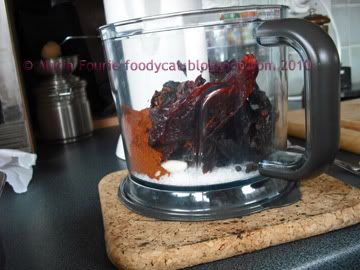
It didn't take me long, though, to decide what I was going to make, inspired by the book. The description of Tita's painstaking preparation of the chorizo drew me in, and I was very keen to make some - although in a much smaller quantity and without nearly as much chilli!

I did a bit of a search and came upon this collection of different recipes for Mexican-style chorizo. I decided that the most do-able one, with the nicest-sounding seasoning, was the last one on the page. It contains ancho and pasilla chillies, coriander, cumin, paprika, cloves, oregano and garlic. How wonderfully fragrant and delicious!

Once I sourced my chillies (from the Cool Chile Co) I was able to get under way.

Of course, once I had my batch of chorizo, I had to decide what to do with it. I made a Sunday breakfast of chorizo con huevos - eggs scrambled with chorizo. I served it on a warm tortilla, topped with grated cheese, quartered cherry tomatoes and chopped coriander.

To my surprise, the chorizo was actually a bit lacking in flavour, although the smoky chilli flavours were quite good. So I turned the rest of the loose chorizo back into a mixing bowl and added 1 tsp smoked paprika, 1 tsp cayenne pepper and another tsp of salt. Much improved! I think Mexican chorizo is going to become a much-favoured ingredient around our house!

Saturday, 13 March 2010

Foodekaat - Himmel un Äd

A while back, the well-travelled and linguistically-inclined Travelrat commented on my blog that Foodycat sounds like Foodekaat, which is the Kölsch (dialect of Cologne) for menu! I would love to say that it was deliberate, but it wasn't, it was a happy accident.

It did get me wondering about the food of Cologne, and thinking that, in honour of the happy accident, I should make something traditional to that part of Germany.

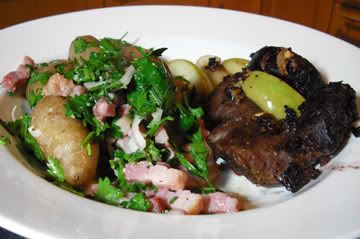
One dish that kept coming up in my searches was an unlikely sounding concoction called Himmel un Äd (in Kölsch, Himmel und Erde in German, Heaven and Earth in English) - a potato and apple puree most often served with blutwurst (black pudding) and fried onions. I decided to take the elements (potato, apple & black pudding) and make it into something a bit more refined.

Heaven and Earth (serves 2)

300g pink fir apple potatoes
bunch of flat leaf parsley
handful of lardons
1 tsp capers, drained
1 shallot, finely sliced
3 tbs white wine vinegar
2 thick slices of black pudding (I know a lot of people rate Bury, I prefer Stornoway) cut in half
1 Granny Smith apple, cored and cut into 8ths
2 pigeon breasts, cut in half
1 clove of garlic, minced
knob of butter
splash of oil
black pepper

Boil the spuds until tender, then drain and place in a salad bowl. Fry the lardons until crisp, then add to the potatoes, along with the capers, parsley and shallot. Deglaze the bacon pan with the vinegar and pour that over the potatoes. Add the butter and oil to the pan (the deglazing means you don't have to wash it up) and when the butter foams, add the apple slices, pigeon breasts and black pudding. Sprinkle the minced garlic over it. After about 3 minutes, turn the ingredients. After another 3 minutes season with black pepper and serve alongside the still-warm potato salad. A minimum effort supper dish that is really very delicious. If not precisely as they make it in Cologne!

Wednesday, 10 March 2010

Reuben Sandwich

I'd been feeling that I hadn't done any cured meat in a while. I wanted to make some sausage or bacon or something. And then I hit upon the perfect thing. Pastrami.

I did some googling, and decided that this recipe from Emeril Lagasse seemed like the most workable for the home cook. I also liked the sound of the seasonings in the brine - I thought it was likely to make delicious pastrami. I used a smaller piece of brisket, so I only left it in the brine for two weeks, not three.

I smoked it on oak dust for 3 hours (it was a very cold day, and I think the ambient temperature kept the smoker cooler than usual) until it reached an internal temperature of 70C. During the smoking, the connective tissue melted out a bit and the brisket separated into two slabs.

The only other thing that I did differently was to press the pastrami under some fairly heavy weights (a plate, a wooden board and 3 cans of tomatoes) over night in order to make it easier to slice into neat serving slices. I left one half intact, wrapped it tightly and put it in the freezer, the other stayed out for eating!

So there was my pastrami. But how to eat it? Well, it had to be a Reuben sandwich! Although apparently it is only a reuben if it is made with salt beef. The same sandwich made with pastrami is a Rachel.

So I needed to make some good rye bread, to match my lovely pastrami.

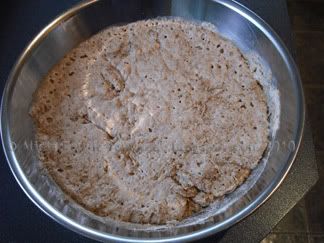
We've been watching the Hairy Bikers on BBC iplayer, and I really liked their Classic Brown Loaf. It used a technique I haven't tried before, of making a ferment with flour, water and yeast and leaving it overnight before adding it to the rest of the flour.

I was very, very dubious when I put the ferment together - it looked very dry - but as the yeast started to work the bubbles worked through all the flour and made a very light sponge.

Because I wanted the rye flavour to come through more, I subbed rye flour for all of the wholemeal flour in the main bread recipe. I also used the last of my whey from cheesemaking instead of the water, to give it an extra tang.

I was a bit scared when I left the bread to prove - at one point I thought it was going to overflow all over the kitchen, so it only got 1 1/2 hours before it went into the oven. It did need the full 30 minutes to bake though.

It's a lovely bread! I gave it about 20 minutes to cool before I cut it, but I should have been a wee bit more patient, because it sliced much better when it was properly cooled.

The rye tang was still very subtle, but it had a lovely chewy texture and robust flavour. And I think the crust is the best I have ever produced; just the right balance between crisp and chewy. The very thing for my sandwich.

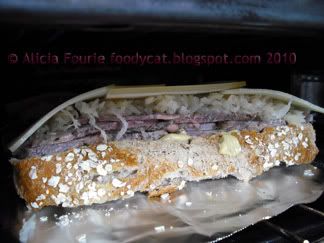
So then it was really just a matter of assembly. A good slice of bread, thickly smeared with mustard (we used Dijon), topped with overlapping thin slices of the pastrami, then forkfuls of well-drained sauerkraut and slices of gruyere cheese.

That went under the grill until the cheese melted and the sauerkraut and pastrami was hot through.

Topped with a second slice of bread and served with tall glasses of German beer, this was pretty much the perfect sandwich experience, and made a really delicious lunch. Genuinely worth the effort! This sandwich is going to Deb for her Souper (soup, salad and sammie) Sunday event!SouperSundays

Monday, 8 March 2010

Urchin and the Carpet

Haven't had any cat pictures for a while! She's 18 months old now and in the middle of a bit of a growth spurt. She's still very dainty but she is beginning to grow into those enormous paws.

This is one of Urchin's favourite games - the monster under the carpet. She is now onto her third one of those feather ticklers, because she is so vicious with it when she catches it, but we think it is a small price to pay for the entertainment of a cat.

Friday, 5 March 2010

Fish Pie for British Pie Week

The week commencing 1st March - this week in fact - is British Pie Week. I hold pies very close to my heart: I think they are comforting, nurturing and very delicious whether sweet or savoury. But I was a bit put off by the fact that Pie Week is pretty much an advertising gimmick for a large pastry manufacturer. So how to celebrate the wonder of traditional British pies whilst sticking it to the man? A pastry-free pie.

In Britain, you see a lot of dishes with a mashed potato topping (shepherd's pie, cottage pie) called a pie. And although I love cottage pie, I absolutely adore fish pie.

There's a lot of flexibility around a fish pie. It's generally a white sauce base, but I have made very good pies on a veloute sauce. Some people like hard boiled eggs in the filling and cheese in the mashed potato - I don't. But I do like a variety of fish and something vegetable-y in mine. But not peas. Please.

This is my recipe for this particular small fish pie. It served the two of us, with enough leftovers for a lunch the next day. If you do a thicker layer of potato, it'll go further.

Fish Pie

2tbs butter
2tbs plain flour
1 leek, washed and finely sliced
Milk (about 1 cup - I used semi skimmed)
A big handful of chopped parsley
300g cod fillet, skinned and cut into chunks (I used an MSC certified one, but if you can't find that, any sustainable white flaky fish)
200g undyed smoked haddock fillet, skinned and cut into chunks (you can use the lurid yellow dyed one, of course. Or a drained can of smoked mussels)
150g raw peeled prawns
nutmeg
freshly ground white pepper
400g frozen mashed potato, thawed (or, you know, a spud and a bit of butter)

Melt the butter in a heavy-based saucepan. When it foams, add the shredded leeks and saute until well-wilted. Sprinkle on the flour and stir well until the flour is thoroughly absorbed into the butter and leeks.

Gradually add the milk, stirring constantly, until you have a thick sauce. I make this a lot thicker and stodgier than my normal bechamel, because I don't pre-cook my seafood, so it'll throw off a lot of moisture and I don't want a runny pie filling.

Add the parsley. Season the sauce well with nutmeg and white pepper. The smoked haddock is very salty, so I don't add extra salt. Simmer for a couple of minutes.

Stir in the seafood, and allow the sauce to come back up to the simmer. Remove from the heat when the prawns are beginning to turn pink.

Pour into a pyrex baking dish, I use an 8" square one. Top with the mashed potato and rough it up with a fork.

Put into a 180C oven for about 35-45 minutes or until the filling is bubbling up around the sides of the dish and the peaks of the potato are an appetising brown. Allow to rest for 5-10 minutes before serving. I served it with steamed purple sprouting broccoli, dressed in a shallot and caper vinaigrette. The rich, creamy fish pie likes something a bit tangy on the side.

Monday, 1 March 2010

A reminder - Cook the Books

Don't forget everyone, you have until Friday, March 26th, to get on board this round of Cook the Books. We're reading Like Water for Chocolate and cooking dishes inspired by it.

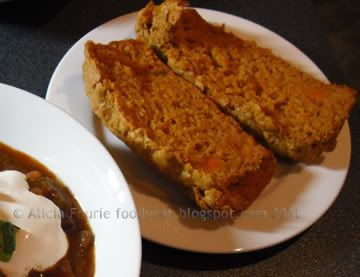
Now, I have decided what I am going to cook. I think. I am pretty sure. But I have noticed that some of the spicy flavours in the book are already sneaking into my cooking! To go with Delia's chilli, I was planning to make some cornbread. But when I opened the cupboard I discovered that we were out of polenta. So I did an audit of the pantry and fridge and then hit Google, coming up with this excellent recipe for a savoury spicy pumpkin bread. I used some of my frozen whey supply instead of milk, but otherwise followed the recipe. It was very successful! Moist, pumpkin-y and with a definite kick. It was also wonderful toasted under the grill and served with cheese for an easy lunch.

I also had most of a tub of cream in the fridge, plus quite a lot of chocolate in the pantry. Several people had given us beautiful artisan dark chocolate for Christmas, but sadly most of it had bloomed. Perfect for cooking, not so good for eating straight. I decided to make a half quantity of Jamie Oliver's chocolate pots, and spice them up a bit. Instead of the brandy, I used half a tablespoon each of good rum, vanilla extract and maple syrup (the extra bitter dark chocolate I was using was a bit much) and added a small amount of cayenne pepper and cinnamon - just enough to give a subtle warmth, not a flavour.

It was pretty cold in my kitchen, so I allowed them to set slowly at room temperature, and garnished the top of each with a tablespoon of cream, so it had a smooth, white surface. It made 2 ramekins-worth, but each ramekin served 2 people generously. It is very, very rich! If I were making it to serve to people I am not married to, I'd make it in shot glasses.

Thursday, 25 February 2010

A short season of Delia Smith

Recently on BBC iplayer we've been watching Delia Through The Decades - a retrospective of Delia Smith's career in TV cookery. It inspired me to dig out my Delia Smith cookbooks and see how the recipes have stood the test of time. It's been cold and wet, with slushy snow and sleet for the last couple of weeks, so I gravitated to the Winter Collection and particularly the chapter on casseroles! I bought a Casserole Box from the Well Hung Meat Company and set about converting the meat into delicious meals - so my recipe selection was partly dictated by the cuts in the box.

First up was the pork stroganoff with three kinds of mustard, using the diced pork. Instead of grainy mustard I used some fancyschmance sun-dried tomato mustard that I got in a Christmas hamper. I also subbed buttermilk for the creme fraiche because it is a third of the price, and added some dried porcini mushrooms because they are delicious. Sadly, this is a very beige plate, because when I cut into the red cabbage that I intended to braise, I discovered that it was in fact a green cabbage with red outer leaves. So I stirfried the shredded cababge with onions and apples and seasoned it with nutmeg. So aesthetically speaking this is a fail, but for flavour a definite win.

Then came Braised Steak au Poivre - a slow-cooked variation on a French pepper steak. My only real variation in this one was to use a mixture of black and fresh green peppercorns. Again, it won't win any beauty contests - although serving it with gratin dauphinoise made things worse - but the flavour was excellent. The braising steak became tender and even though there is only a small amount of cream in it, it tasted very rich and decadent.

With the diced beef from the casserole box, I made Black Bean Chilli with Avocado Salsa. This was the only one of the recipes I'd made before, so I knew it was good. Unfortunately the supermarket substituted a small can of red kidney beans for my 500g bag of dried black turtle beans, so the chilli wasn't as beany as I like and didn't have the luscious purple colour that the black beans give. But the flavour was excellent and the fresh, cool salsa is such a nice contrast in temperature and texture.

Lastly, the lamb neck fillet was crying out to become Irish Stew with Crusted Dumplings. I only used neck fillets, rather than a mixture of fillets and cutlets, and I cheated and bought suet dumplings - I can get suet dumplings from supermarket for less than the ingredients to make them. So because my dumplings didn't have parsley in them, I added some dried thyme to the seasoned flour. I made this on Tuesday night, while my spaghetti sauce was simmering for that night's dinner, then added the dumplings and finished it off in the oven last night, so even though it has a long cooking time, it wasn't at all arduous. This one will definitely be made again - somehow I hadn't realised that lamb and barley and dumplings are three of Paul's favourite foods, and together they had him in raptures.

I'm now inspired to go through more of my cookbooks, to see what treasures I have missed, or forgotten!


LinkWithin

Related Posts Plugin for WordPress, Blogger...