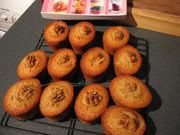
As every British foody knows, January is the fleeting season when you can get lovely bitter Seville oranges for making marmalade. You can make marmalade from lots of citrus fruits, all with their own charm (
Rose's Lime Marmalade was a favourite treat in my childhood; cumquats make a very fine marmalade) but for me the pinnacle of all marmalades is Seville orange. It is tangy and very intensely orange-flavoured and just wonderful whether you eat it on toast or as part of a sauce for game.
Within the basic outline of fruit, sugar and water, there is
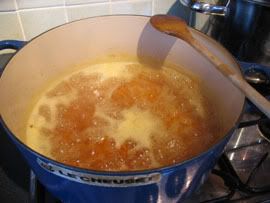
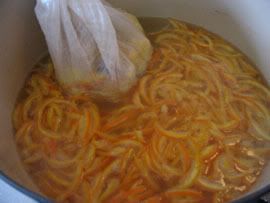
almost infinite variation. Thick or thin cut peel, dark and bitter or light and fresh, Dundee-style or Oxford-style, with whisky, with brandy, with spices. And then there are the variations on technique - boiling whole oranges, juicing the oranges and then slicing the peel, soaking the peel, making it in the microwave, running the juice through a jellybag. And so on and so forth.
It gets even more complicated in the heady world of marmalade competitions. Rumour has it that entrants in the marmalade competition at the
Sydney Royal Easter Show use a metal ruler and a scalpel to slice their peel into exactly even shreds and then use a fine needle to position the peel in the jar so that no two shreds touch.
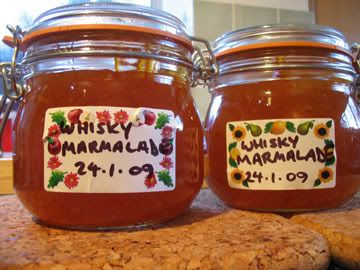
I don't think it really needs to be said that I went to no such effort.
I like a fine-shred, not too dark marmalade (I find thick shreds fall off my toast). I followed
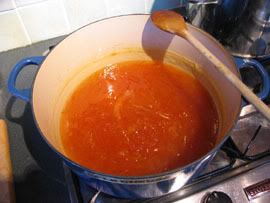
this recipe although I didn't add any spices to it. I only did a half quantity, and even then I found it hard going! I had blisters from slicing the peel and the papercuts from my normal working week did not thank me for the application of lemon and orange juice. But the result of my toil was worthwhile - lovely fresh flavour, beautiful colour, and an excellent set.
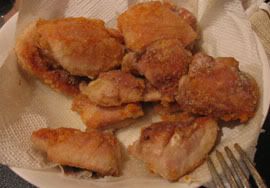 I had chicken, I wanted spice and heat, I wanted to use my new chopstick set (£2 in Hong Kong). So I did a chicken-y modification of the green peppercorn tofu recipe, dredging my chunks of chicken thigh fillet in cornflour before frying it really hard in a small amount of olive oil.
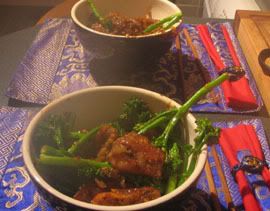 used a knob of stem ginger cut into slivers, and left out the muscovado sugar, counting on the sweetness from the ginger to balance it out. And it did.